Electric ride insurance basics include specialized coverage for theft, liability, and accidental damage that standard homeowners' policies often exclude for motorized vehicles. While Class 1, 2, and 3 e-bikes generally do not require insurance by law, electric motorcycles and mopeds typically do. These policies offer financial protection for high-value components like batteries and provide roadside assistance to ensure rider safety.
Many owners invest thousands in a high performance e-bike or electric scooter under the mistaken belief that their existing homeowners or renters policy provides adequate protection. Unfortunately, most riders only discover the reality of coverage gaps after an accident or theft occurs. As personal electric vehicles move from hobbyist toys to legitimate transportation, the insurance landscape has become a complex web of classifications and state-specific regulations. Understanding these nuances is no longer optional for the responsible rider. This comprehensive guide breaks down the core components of electric ride insurance. We will examine how vehicle classes one through three influence your premiums, why specialized policies are necessary to avoid the homeowners insurance trap, and what specific coverages you need to secure your financial future.
What is Electric Ride Insurance and Why Does it Exist?
Electric ride insurance is a specialized financial product designed to bridge the gap between traditional homeowners insurance and standard auto policies. While many owners assume their existing coverage extends to their micromobility devices, standard policies frequently contain strict exclusions for any vehicle equipped with a motor. Once a motor is involved, a standard bicycle policy is often insufficient, while an auto policy may not recognize an e-scooter or Class 2 e-bike as a valid vehicle for coverage. This leaves riders in a legal and financial grey area where a total loss or a significant liability claim could be paid entirely out of pocket.
Understanding electric ride insurance basics starts with recognizing why these rides require unique protection. Traditional motorcycle insurance focuses on high-speed displacement and internal combustion risks. In contrast, electric ride policies are built to address high-value components like lithium-ion battery packs, which can account for up to 40 percent of a vehicle's total cost. Furthermore, these policies account for the unique liability risks associated with silent operation. Because electric motors do not produce the auditory warning of a gas engine, the risk of pedestrian collisions in dense urban environments like Dallas is statistically distinct.
These specialized policies provide a safety net that generic insurance products cannot. By choosing to compare insurance quotes, riders can find coverage that specifically includes:
Replacement cost for specialized battery systems following a covered loss.
Liability protection for silent-operation accidents involving pedestrians.
Comprehensive coverage for theft, which remains a high risk for portable electric devices.
Learning how electric ride insurance works ensures that riders are protected against the specific mechanical and legal realities of modern e-mobility. This specialized coverage is the only way to ensure that a technological upgrade does not result in a major insurance gap.
The Core Foundation: Why Vehicle Classification Dictates Your Insurance Needs
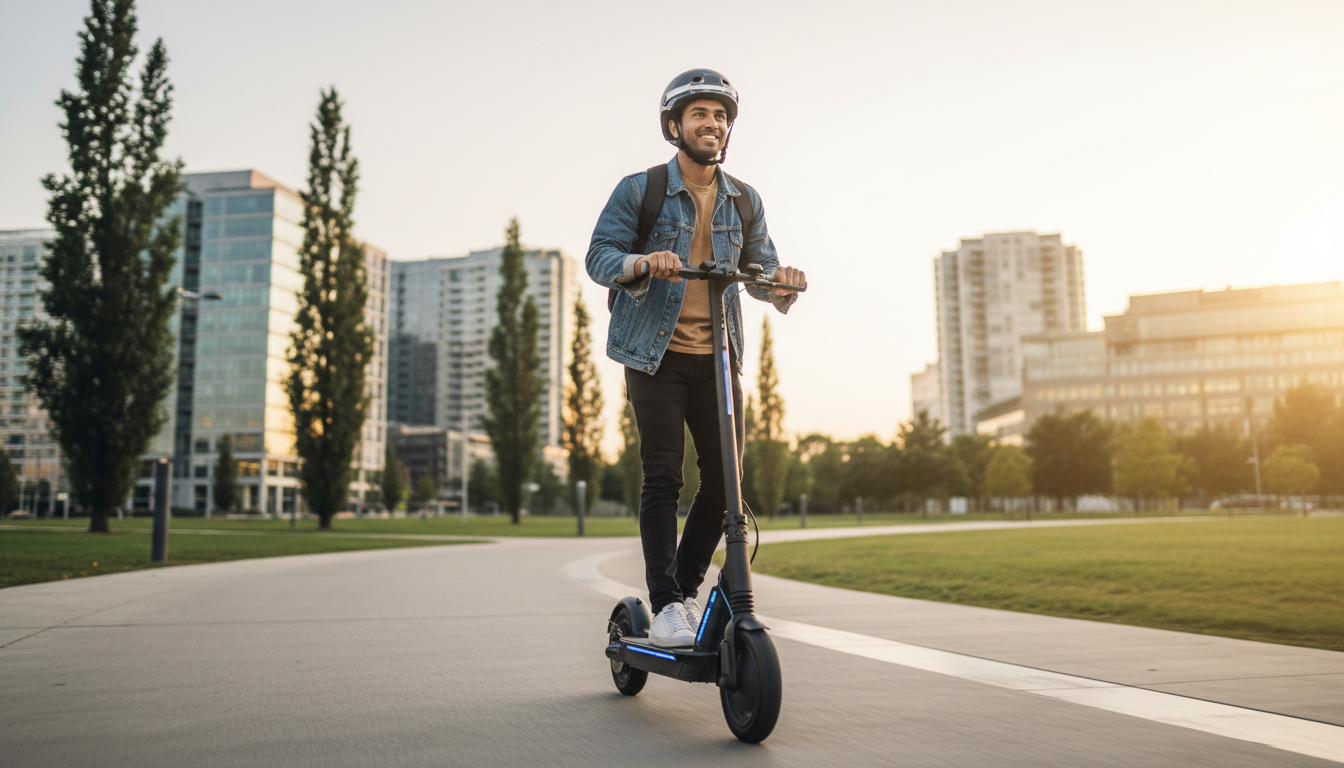
Vehicle classification is the primary factor determining your coverage needs and premium costs. In the United States, and specifically within Texas, the legal distinction between a bicycle and a motor vehicle hinges on speed and power output. Understanding these categories is central to navigating electric ride insurance basics, as insurers use these tiers to assess risk and define policy exclusions.
For e-bikes, the industry standard follows a three-class system:
Class | Operation Type | Max Assisted Speed | Insurance Implications |
|---|---|---|---|
Class 1 | Pedal-assist only | 20 mph | Often excluded by home insurance; requires specialized liability. |
Class 2 | Throttle-actuated | 20 mph | Throttles increase motor vehicle risk profiles for underwriters. |
Class 3 | Pedal-assist only | 28 mph | High speed often mandates standalone policies for theft and collision. |
While Class 1 and 2 e-bikes are frequently permitted on multi-use paths, Class 3 bikes are often restricted to roadways or specific bike lanes. These regulatory boundaries directly impact your liability profile. If you operate a Class 3 e-bike on a restricted Dallas trail and an accident occurs, a standard insurer might deny the claim based on illegal operation. Because Class 3 bikes can reach speeds comparable to city traffic, the risk of serious bodily injury to third parties is significantly higher.
The complexity increases when moving to e-scooters and electric motorcycles. Generally, if a device exceeds a 750 watt motor or 20 mph top speed, it may transition legally into the moped or motorcycle category. In Dallas, local ordinances further refine these definitions; for instance, the city has specific rules governing where micromobility devices can be ridden and parked. Operating an e-scooter on sidewalks in the Central Business District is generally prohibited, which creates a specific liability risk for commuters who must navigate street traffic.
Before you compare insurance quotes, it is essential to identify your vehicle's wattage and top assisted speed. A high-speed electric scooter capable of 40 mph is no longer a bicycle in the eyes of Texas law; it is a motor vehicle that likely requires registration and liability levels equivalent to a motorcycle. By clarifying these classifications, riders can better understand how electric ride insurance works to protect against specific urban risks, such as the increased probability of pedestrian contact in high-traffic areas like Deep Ellum or Uptown.
E-bike Insurance Basics: Understanding Class 1, 2, and 3 Requirements
Many Class 1 and Class 2 e-bike owners operate under the assumption that their existing homeowners or renters insurance provides sufficient protection. However, most standard property policies include a specific motorized vehicle exclusion. This exclusion often applies the moment a motor is involved, regardless of the bike's top speed or power output. If a Class 2 throttle-assist bike is stolen from a garage or if a rider causes property damage, the claim may be denied because the device is technically a motorized vehicle. Seeking specialized e-bike insurance information is the only way to ensure these gaps are closed.
Class 3 e-bikes, which provide pedal assistance up to 28 mph, present a higher risk profile that almost always necessitates a standalone policy. At these speeds, the potential for high-impact collisions increases significantly. For those navigating the busy streets of Deep Ellum or Uptown, vehicle contact protection is an essential component of electric ride insurance basics. This coverage protects the rider if a motorist hits them and lacks sufficient insurance, a common scenario in dense urban environments.
Standalone policies typically start around $100 per year and offer more than just liability. They include comprehensive theft protection and coverage for specialized components. When you compare insurance quotes, look for policies that specifically cover the battery and electrical system, as these are rarely protected by general liability plans. Understanding how electric ride insurance works allows riders to select a deductible that fits their budget while ensuring their high-speed commuter tool is fully protected against the realities of Dallas traffic.
Electric Scooter and Moped Coverage: Navigating the Grey Areas
While e-bikes follow a rigid class system, electric scooters and mopeds operate in a more fluid legal space. A primary component of electric ride insurance basics for scooter owners is comprehensive coverage. Because of their high portability and resale value, e-scooters face significant theft rates in urban centers like Dallas. Specialized policies protect against theft and vandalism whether the scooter is locked at a DART station or stored in an apartment parking garage, a level of protection rarely offered by standard renters policies.
The legal landscape shifts once a scooter exceeds a top speed of 20 to 30 mph. At this threshold, Texas law often reclassifies the device as a moped or motor-driven cycle. This change triggers a legal requirement for state-mandated minimum liability insurance and formal vehicle registration. Failing to recognize this transition can leave riders legally vulnerable and personally liable for significant damages.
One perceived disadvantage of electric scooters is their physical vulnerability to damage and high theft risk. However, specialized insurance mitigates these concerns by providing replacement cost coverage and personal liability protection. If a rider accidentally clips a pedestrian on a crowded sidewalk in Uptown, the liability portion of the policy manages the financial fallout. To ensure your specific model meets local requirements, you should compare insurance quotes from providers who understand how electric ride insurance works for high-speed micromobility devices.
Electric Motorcycle Insurance: Beyond the Standard Policy

While liability requirements for electric motorcycles in Texas mirror those of internal combustion engines, the physical damage coverage requires a fundamentally different underwriting approach. The primary driver of this shift is the battery pack, which often represents 40 percent or more of the machine's total market value. In a gas motorcycle, a damaged fuel tank or exhaust is a modular repair; however, in an electric motorcycle, even a minor impact to the battery casing can trigger a total loss because the cost of a replacement pack and specialized labor exceeds the vehicle's actual cash value threshold.
When you compare insurance quotes, it is vital to verify that the policy includes specific battery replacement coverage rather than just generic parts protection. This distinction is a core element of electric ride insurance basics that generic auto policies frequently overlook. Furthermore, the Dallas market has a growing community of custom builders using conversion kits. Standard insurers often struggle to provide coverage for these machines because they lack a traditional VIN or clear manufacturer valuation. Specialized policies bridge this gap by offering agreed-value coverage for custom builds, ensuring that high-end motors and controllers are fully accounted for. Understanding how electric ride insurance works for these high-performance machines ensures your investment is protected from the specific financial risks of electric propulsion.
How Electric Ride Insurance Coverage Works: The Essential Policy Parts
A specialized policy is built upon four foundational pillars that address the unique risks of micromobility. Understanding these components is the core of electric ride insurance basics, as it allows riders to move beyond simple property protection and into comprehensive risk management. While every provider offers different tiers, the following structure represents the industry standard for protecting high-value electric rides.
Policy Pillar | What It Covers | Why It Matters |
|---|---|---|
Liability | Third-party bodily injury and property damage. | Protects your assets if you are at fault in an accident. |
Comprehensive | Theft, fire, vandalism, and weather damage. | Essential for high-theft urban areas like Dallas. |
Collision | Damage to your ride resulting from a crash. | Covers repair or replacement of motors and frames. |
MedPay / PIP | Your own medical expenses after an accident. | Provides immediate medical funds regardless of fault. |
Liability coverage is arguably the most critical part of the policy. Consider a scenario where an e-scooter rider in Uptown Dallas accidentally clips a pedestrian on a crowded sidewalk. If the pedestrian suffers a broken wrist and their laptop is smashed in the fall, the liability portion of the policy activates. The Bodily Injury (BI) component pays for the pedestrian's medical bills and rehabilitation, while the Property Damage (PD) component covers the replacement cost of the laptop. Without this protection, the rider would be personally responsible for these costs, which can easily reach five figures in a legal settlement.
To ensure full protection, riders should compare insurance quotes that include robust comprehensive and collision options. Comprehensive coverage is particularly vital for electric vehicles because it covers the battery and electrical system against non-collision events, such as a localized fire or theft from a secure garage. Collision coverage ensures that if you hit a stationary object or another vehicle, the high cost of specialized electric components is not a total loss. By learning how electric ride insurance works, you can tailor these pillars to your specific riding habits. For more detailed data on coverage limits, you can review our e-bike insurance information to see how these parts apply to different vehicle classes.
The Homeowners Insurance Trap: Why Your Current Policy Might Fail You

Relying on a standard homeowners or renters policy to protect a high-value e-bike or electric scooter is a common but risky assumption. Most standard property policies in the United States contain a specific motorized vehicle exclusion. This clause typically denies coverage for any vehicle that is self-propelled or capable of being operated on public roads. Since even a Class 1 e-bike technically features a motor, an adjuster may categorize it as a vehicle rather than personal property, leaving you without protection after a crash or theft.
Furthermore, even if your policy provides a narrow window of coverage for non-motorized property, the off-premises limits are often severely restricted. If your ride is stolen while locked at a transit hub or outside a Dallas coffee shop, the payout might be limited to a small fraction of the replacement value. This is a significant gap in coverage for urban commuters who rely on their devices daily.
The financial math of a claim further complicates the situation. A typical homeowners deductible in Texas is often 1% of the home's value or a flat $2,500. If your $1,500 e-scooter is stolen, the loss falls entirely below the deductible, meaning the insurance company pays nothing. In contrast, when you compare insurance quotes for specialized policies, you will find deductibles as low as $100. This lower threshold makes the coverage practical for everyday micromobility risks.
Understanding these nuances is a key part of electric ride insurance basics. Specialized providers understand how electric ride insurance works in ways that general carriers do not. For more specific policy details, review our e-bike insurance information to see how these exclusions apply to your specific model.
Determining Cost: What You Can Expect to Pay
Understanding the financial commitment is the final piece of mastering electric ride insurance basics. For most riders in the Dallas-Fort Worth area, a standalone policy is surprisingly affordable when compared to the out-of-pocket cost of a stolen battery or a liability lawsuit.
Annual premiums generally fall into these brackets based on vehicle type and value:
Vehicle Type | Typical Annual Starting Cost | Primary Rate Drivers |
|---|---|---|
E-bikes (Class 1-3) | $100 - $300 | Purchase price, lock quality, storage location. |
Electric Scooters | $150 - $400 | Top speed, urban theft rates, rider age. |
Electric Motorcycles | $400 - $1,200+ | Battery capacity, engine output, riding history. |
Your specific rate depends heavily on local variables. A commuter who parks an e-scooter on the street near a DART station in Downtown Dallas will face higher premiums than someone who keeps their ride in a secured garage in Highland Park. Usage is another significant factor; using your bike for commercial delivery services significantly increases your liability exposure compared to weekend recreational use. The power of the motor and the age of the rider also dictate the risk profile, particularly for high-performance electric motorcycles where repair costs for specialized frames and battery cells are substantial.
Before you finalize a purchase, it is wise to compare insurance quotes to see how your specific model and zip code impact your premium. Reviewing e-bike insurance information regarding deductibles can also help you balance monthly costs against potential claim payouts. By understanding how electric ride insurance works in relation to these variables, you can secure the best protection for your budget.
Navigating the nuances of e-bike and scooter classifications is the first step toward securing your investment and ensuring you stay protected on the road. While understanding the basics of coverage is essential, the details can often feel overwhelming when you are trying to find the perfect policy. If you want expert help tailored to your specific ride, we are here to simplify the process. You can explore how it works to learn more about our approach and find the right protection for your journey.